
Shockwave Therapy in Naples, FL
SoftWave Acoustic Therapy to Stimulate Healing for Stubborn Pain
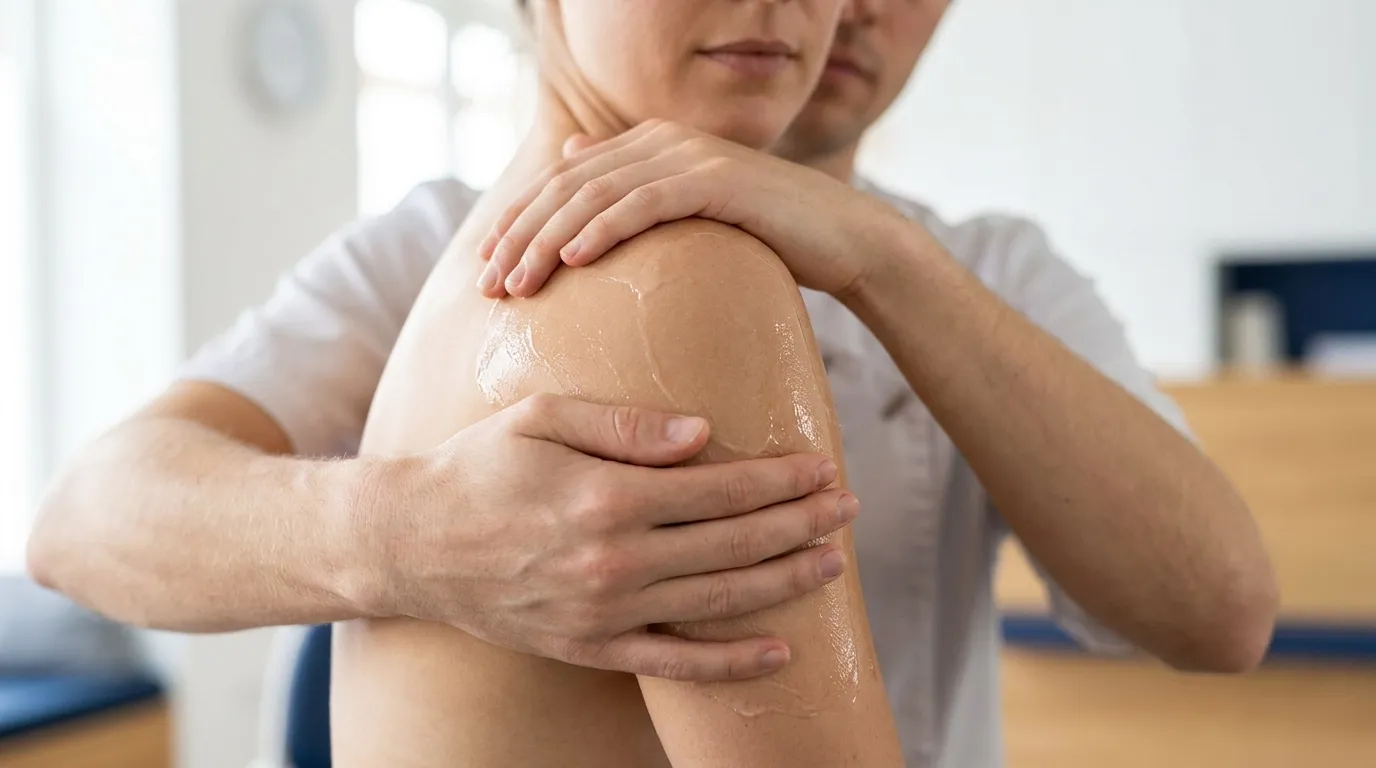
Shockwave Therapy That Targets the Source
Shockwave therapy in Naples, FL is a non-invasive treatment that sends acoustic pressure waves into injured tendons, fascia and joints to restart the healing response in tissue that has stopped repairing itself, relieving chronic heel, elbow, shoulder and knee pain. Sessions take 10 to 15 minutes and most patients need 3 to 5 visits.
Dr. James Bergtold, DC has treated more than 5,000 patients across 25+ years of practice and holds advanced certification in SoftWave acoustic tissue regeneration. He uses SoftWave where the exam and on-site X-ray show a tissue that needs a healing stimulus, alongside the other therapies and advanced treatments in our Naples clinic. Bergtold Chiropractic welcomes patients from Naples, Bonita Springs, Estero and Marco Island at our Park Central Court clinic in Naples.
Why Stubborn Tendon Pain Calls for Shockwave Therapy
Some injuries never finish healing. A heel that stabs on the first step out of bed, an elbow that burns every time you swing a racquet, a shoulder that has been sore since a fall two years ago. The tendon or fascia has quietly turned into disorganized scar tissue with almost no blood supply, so there is nothing left to carry repair cells in. Rest helps for a week, then the pain returns the moment you load it again.
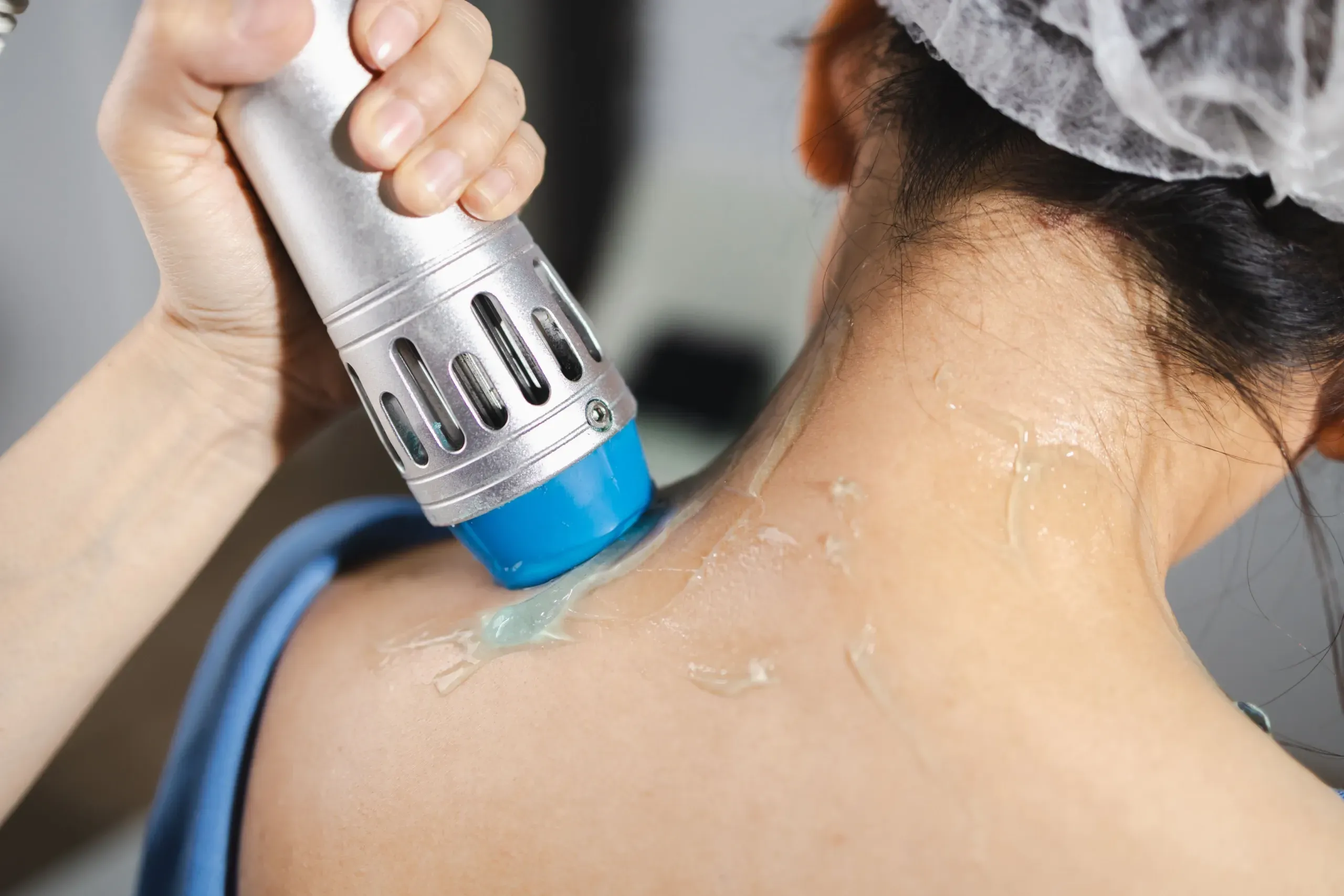
Shockwave therapy addresses that stall by force. Acoustic pressure waves travel into the tissue and create a controlled mechanical stimulus the body cannot ignore, prompting new capillary growth, the release of growth factors and the breakdown of scarred tissue so healthy fibers can rebuild. Most patients feel a firm tapping during the session, walk out with no restrictions, and notice the area loosening across the first two or three visits.
What Is Shockwave Therapy?
The Science of Mechanotransduction
Shockwave therapy, known clinically as extracorporeal shockwave therapy, uses acoustic pressure waves to restart healing in tendon, fascia and joint tissue that has stopped repairing on its own. Devices in this class are FDA cleared for improved blood supply and temporary relief of minor muscle and joint pain, and no needles or anesthesia are involved.
Each pulse creates a brief mechanical stress inside the tissue, a process called mechanotransduction, and the body reads that signal as a reason to build new capillaries and bring repair cells to the area. Relief often begins within days, and remodeling continues for weeks after the last visit, which is why we pair it with cold laser therapy.
Shockwave Therapy Treatment Areas
Targeted Tissue Regeneration
Plantar Fasciitis
Breaks up scarred fascia and restores blood flow to the heel
Tendonitis and Tendinopathy
Restarts repair in elbow, shoulder, hip and Achilles tendons
Knee Pain
Eases patellar tendon pain and early arthritic joint soreness
Sports Injuries
Speeds recovery in overloaded muscle, tendon and ligament
Whiplash Recovery
Softens guarded neck and shoulder tissue after a collision
Auto Accident Injury
Treats scar tissue and adhesions left behind by soft tissue trauma
Benefits of Shockwave Therapy
Healing Without Surgery






- 01
No Needles or Surgery
Waves pass through the skin without breaking it or numbing it
- 02
Zero Downtime
Drive, work and train the same day as your session
- 03
Short Course of Care
Most conditions respond within three to six weekly sessions
- 04
Drug-Free Relief
An option when injections or medication are not wanted
- 05
Reaches Scarred Tissue
Stimulates blood supply in tendons that stopped healing
- 06
Two Applicator Types
Broad SoftWave coverage or point-focused Piezowave work
Shockwave Therapy vs. Alternatives

Who Is a Good Candidate for Shockwave Therapy?
Finding the Right Therapy
Ideal Candidates for Shockwave Therapy
- Adults with plantar fasciitis or heel pain that has lasted longer than six weeks
- Patients with chronic tendonitis in the elbow, shoulder, hip, knee or Achilles
- Active adults and athletes with sports injuries that keep recurring in the same spot
- Patients with knee pain from patellar tendon overload or early joint wear
- People recovering from auto accident injury with lingering scar tissue and adhesions
- Anyone who wants a drug-free option before considering injections or surgery
- Patients with realistic expectations who can commit to three to six weekly visits
Who Should Wait or Avoid Shockwave Therapy
- Pregnancy, or any treatment area over the abdomen and low back during pregnancy
- Known or suspected cancer in or near the area being treated
- Bleeding disorders, or anticoagulant therapy that has not been cleared by your physician
- Active infection, an open wound or a recent fracture at the treatment site
- Blood clots, deep vein thrombosis or a large blood vessel directly under the target
- Corticosteroid injection into the same site within the previous six weeks
- Growing children, where a focused wave would fall over an open growth plate
What Happens During Shockwave Therapy
Step-by-Step Process
- 01
Exam
Dr. Bergtold examines the area, reviews imaging and maps the exact tissue to treat.
- 02
Setup
Daniela applies ultrasound gel so the SoftWave applicator couples cleanly to the skin.
- 03
Treatment
Pulses are delivered over the area for 10 to 15 minutes at an intensity you can tolerate.
- 04
Focused Work
Dr. Bergtold switches to the Piezowave unit to target any remaining trigger point.
- 05
Aftercare
You leave without downtime, and Dr. Bergtold advises easing off heavy load for about 48 hours.
- 06
Reassessment
Range of motion and pain levels are rechecked each visit and the plan is adjusted.
Risks and Side Effects
What to Know
Common Shockwave Therapy Side Effects
Shockwave is well tolerated, but it is not a passive treatment. Most patients report discomfort during the pulses themselves, then temporary soreness, redness or mild swelling over the treated area for 24 to 48 hours. Small bruises and short-lived numbness or tingling in the area also occur. These reactions typically settle on their own and are part of the expected response as circulation increases.
Rare Complications
Serious adverse events are uncommon in published trials of extracorporeal shockwave therapy. Reported rare problems include skin breakdown over very superficial bone, hematoma, and a temporary increase in pain that outlasts the usual two days. Treating over a nerve trunk, a blood clot, an infection or a recent fracture raises the risk, which is why those areas are excluded.
Safety and FDA Status
Shockwave devices of this class reach the market through the FDA 510(k) premarket notification process. Dr. Bergtold sets energy level and pulse count by tissue depth and by what you can tolerate, and steps the intensity up across the course rather than starting at maximum.
Shockwave Therapy Cost in Naples
Pricing and Payment Options
How Much Does Shockwave Therapy Cost in Naples?
Cost depends on how many sessions your condition needs, the size and depth of the area being treated, whether the plan uses the broad SoftWave applicator, the focused Piezowave unit or both, and whether shockwave runs alongside adjustments or decompression. Shockwave is delivered as a short course rather than a single visit, so we quote a plan instead of a per-visit fee. Call (239) 593-6788 and we will give you a clear number before anything is scheduled.
Insurance and Coverage
We accept Blue Cross Blue Shield, Aetna, Medicare, Medicare Advantage, UnitedHealthcare and Cigna. Coverage for extracorporeal shockwave therapy varies widely and many carriers still classify it as a non-covered service even when they cover chiropractic care, so our team verifies your benefits in advance and tells you what will be out of pocket.
Flexible Payment Options
- CareCredit - healthcare financing with monthly payment plans, applied for online or at the front desk
- Written care plans - sessions bundled into one plan so the total is known before you start
Marnie at the front desk handles benefit checks and financing questions, so the cost is never a surprise partway through a course of care.



Why Choose Bergtold Chiropractic for Shockwave Therapy in Naples
Naples Trusted Provider
Certified in SoftWave
Advanced certification in SoftWave tissue regeneration
More Than Two Decades of Care
More than 5,000 patients treated across 25+ years of practice
Diagnosis Before Therapy
On-site X-ray and hands-on exam guide every treatment plan
Focused and Broad Wave
SoftWave, PISA and Piezowave applicators under one roof
Rated 5.0 by Patients
A 5.0 Google rating from more than 200 Naples patient reviews
Athlete-Level Training
Trained alongside doctors for USA Olympic team and NFL players
Related Treatments
Treatments that pair well with shockwave therapy in Naples.

Frequently Asked Questions About Shockwave Therapy
Your Questions Answered
How much does shockwave therapy cost in Naples?
Cost is quoted as a plan rather than a single visit fee, because shockwave works over a short course of sessions. The number of visits, the area treated and whether the plan uses SoftWave, Piezowave or both affect the total. Call (239) 593-6788 and our team will verify your insurance benefits and explain CareCredit before anything is scheduled.
Does shockwave therapy hurt?
You will feel it. Most patients describe a firm, rapid tapping that turns uncomfortable when the applicator crosses the sore spot, which is how we confirm we are on the right tissue. No anesthesia is used, and Dr. Bergtold adjusts the intensity to what you can tolerate. The discomfort stops when the pulses stop, and mild soreness may linger a day or two.
How long does a shockwave therapy session take?
Ten to 15 minutes for most areas. A single heel or elbow sits at the short end, while a shoulder and neck region treated with both SoftWave and Piezowave takes longer. You stay clothed apart from the treatment area, there is no preparation beforehand and no recovery afterward, so most visits are done inside half an hour.
How many shockwave therapy sessions will I need?
Three to six sessions is typical, usually one per week. Long-standing tendon problems and heel pain that has been present for years often need the upper end of that range, while a recent overload injury may settle sooner. Dr. Bergtold rechecks your progress each visit and will tell you if the tissue is not responding rather than extending a plan.
When will I see results from shockwave therapy?
Many patients notice easier movement and less morning stiffness after one to three sessions. Because the treatment triggers new blood vessel growth and tissue remodeling rather than blocking a pain signal, the fuller effect keeps building for six to 12 weeks after the last visit. Results vary with how long the tissue has been damaged.
What is the difference between SoftWave and Piezowave?
SoftWave sends unfocused acoustic waves across a broad field, so it covers a whole heel, knee or shoulder in one pass. Piezowave concentrates energy at a selected depth to reach a single trigger point or scarred tendon insertion. We use SoftWave and PISA for regional coverage and Piezowave for precision work, and many plans combine both in one visit.
What is the difference between shockwave therapy and cold laser therapy?
Shockwave is mechanical and cold laser is photochemical. Acoustic pressure waves create physical stress that prompts new blood vessel growth in scarred tissue, while cold laser therapy uses light absorbed by cell mitochondria to lower inflammation. Shockwave suits chronic tendon problems, laser suits inflamed tissue, and Dr. Bergtold often uses both.
Is shockwave therapy safe for seniors and teenagers?
Yes for most seniors and for skeletally mature teenagers. There is no medication involved, so it does not interact with heart or blood pressure prescriptions. We do avoid focused waves over open growth plates in still-growing children, and we screen for blood thinners, clotting disorders, pacemakers and any suspected tumor in the area first.
Does insurance cover shockwave therapy?
It depends on your plan. We accept Blue Cross Blue Shield, Aetna, Medicare, Medicare Advantage, UnitedHealthcare and Cigna, but many carriers still classify extracorporeal shockwave therapy as non-covered even when they cover chiropractic care. Our office verifies your benefits before the first session so the out-of-pocket cost is clear in advance.
Can shockwave therapy be combined with chiropractic adjustments?
Yes, and it often is. Loosening a scarred tendon or a guarded muscle first can make a chiropractic adjustment more comfortable and help the correction hold. Dr. Bergtold sequences shockwave, adjusting and laser within the same visit when the exam supports it, rather than treating each one in isolation.
What is the localized cryotherapy spray used for?
It is an optional adjunct for pain and inflammation. After acoustic wave work, a brief localized cryotherapy spray cools the surface of the treated area, which calms pain signalling and helps limit swelling in the hours that follow. The application takes under a minute, it is used on the treated area only, and we always ask before applying it.
Schedule Your Consultation
References
- Charles et al., Front Immunol. (2023). The effectiveness of shockwave therapy on patellar tendinopathy, Achilles tendinopathy, and plantar fasciitis: a systematic review and meta-analysis. PMID: 37662911.
- Melese et al., Disabil Rehabil. (2022). Extracorporeal shock wave therapy on pain and foot functions in subjects with chronic plantar fasciitis: systematic review of randomized controlled trials. PMID: 34038642.
- Smallcomb et al., Am J Phys Med Rehabil. (2022). Therapeutic Ultrasound and Shockwave Therapy for Tendinopathy: A Narrative Review. PMID: 35859290.
- Xue et al., BMC Musculoskelet Disord. (2024). Effect of extracorporeal shockwave therapy for rotator cuff tendinopathy: a systematic review and meta-analysis. PMID: 38704572.
- Tang et al., Int J Surg. (2024). The efficacy of extracorporeal shock wave therapy for knee osteoarthritis : an umbrella review. PMID: 38668665.
- U.S. Food and Drug Administration. (2024). Extracorporeal shockwave devices are cleared for marketing through the 510(k) premarket notification database.