
Spinal Decompression in Naples, FL
Non-Surgical Hill DT Therapy to Relieve Disc and Nerve Pressure

Targeted Spinal Decompression Care
Spinal decompression in Naples, FL is a non-surgical, motorized traction treatment that gently stretches the spine to create negative pressure inside a compressed disc, drawing bulging material away from the nerve and restoring circulation to the disc. Sessions take 20 to 30 minutes on the Hill DT table with no downtime.
Dr. James Bergtold, DC has practiced in Naples for 25+ years and has treated more than 5,000 patients. He is certified in both the cervical and the lumbar Hill DT decompression protocols, and he uses on-site X-ray imaging to confirm disc and nerve involvement before your first session on the table. Bergtold Chiropractic welcomes patients from Naples, Bonita Springs, Estero and Marco Island at our Park Central Court clinic in Naples.
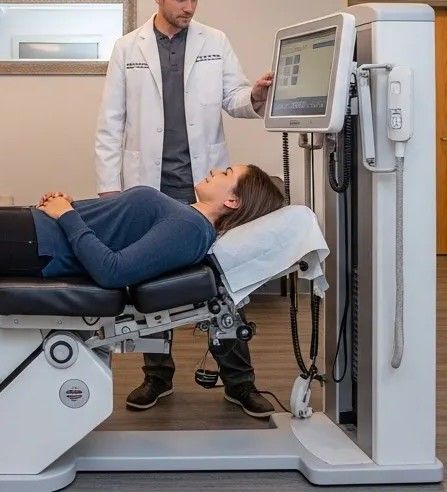
When Disc Pressure Calls for Spinal Decompression
Pain that starts in the low back or the neck and then travels down a leg or an arm usually means a disc is pressing on a nerve root. You may notice it worst first thing in the morning, after a long drive up I-75, or every time you bend to lift something off the floor. Sleep gets broken. Standing at the kitchen sink turns into a negotiation. Many patients tell us they have already tried rest, anti-inflammatories and stretching without ever reaching the disc that is causing the problem.
Spinal decompression works on the mechanical cause instead of masking the symptom. The Hill DT table applies a precise, computer-controlled pull along the axis of your spine and then releases it in a repeating cycle. That cycle lowers the pressure inside the disc so displaced tissue can draw back toward the center and so fluid, oxygen and nutrients can move back in. Most patients describe it as a steady stretch and nothing more. There is no incision, no anesthesia and no recovery period afterward.
What Is Spinal Decompression?
The Science of Negative Disc Pressure
Spinal decompression is a non-surgical traction therapy that uses a motorized table to lengthen the spine and take mechanical load off a damaged disc. At our Naples clinic it runs on the FDA-cleared Hill DT table, with separate protocols for the lumbar spine and the cervical spine.
Each cycle of pull and release lowers the pressure inside the disc, which may allow displaced disc material to retract and lets fluid move back in. You stay fully clothed on a padded table. Relief typically builds across a series of visits, and many patients add cold laser therapy between sessions.
Spinal Decompression Treatment Areas
Disc, Nerve and Joint Pressure
Chronic Low Back Pain
Unloads lumbar discs and facet joints that ache with sitting
Lumbar Disc Herniation
Lowers intradiscal pressure so bulging tissue can draw inward
Sciatica and Leg Pain
Eases pressure on the nerve root that refers pain down the leg
Neck and Cervical Discs
Cervical Hill DT protocol for disc-related neck and arm pain
Pinched Nerves
Opens the space where a nerve exits the spine to reduce pinching
Knee Joint Compression
Knee decompression protocol relieves load on a painful joint

Benefits of Spinal Decompression
Relief Without Surgery






- 01
No Surgery Needed
Treats the disc directly with no incision and no anesthesia
- 02
No Downtime
You drive yourself home and return to your day right after
- 03
Imaging-Guided Plan
On-site X-ray confirms disc and nerve involvement before day one
- 04
Cervical and Lumbar
Hill DT protocols cover the neck, the low back and the knee
- 05
Drug-Free Approach
Addresses mechanical pressure instead of masking pain signals
- 06
Comfortable Sessions
Most patients feel a steady stretch and rest through the visit
Spinal Decompression vs. Alternatives

Who Is a Good Candidate for Spinal Decompression?
Finding Your Path to Relief
Ideal Candidates for Spinal Decompression
- Adults with a diagnosed or suspected herniated or bulging disc
- Patients with sciatica or radiating arm and leg pain from a compressed nerve
- Ongoing low back pain or neck pain that has not responded to rest and medication
- Anyone who wants to exhaust conservative options before considering surgery
- Patients able to commit to a multi-week series of visits rather than a single session
Who Should Wait or Avoid Spinal Decompression
- Pregnancy, at any stage
- Spinal fusion hardware, artificial discs or other surgical implants in the treated region
- Severe osteoporosis, spinal fracture or a spinal tumor
- Abdominal aortic aneurysm or advanced vascular disease
- Progressive neurologic loss, saddle numbness or new bowel and bladder changes
What Happens During Spinal Decompression Treatment
Step-by-Step Process
- 01
Exam and Imaging
Dr. Bergtold performs an orthopedic and neurologic exam and reviews on-site X-rays.
- 02
Positioning
A technician fits a padded lumbar or cervical harness and positions you on the Hill DT table.
- 03
Decompression
The table applies a computer-guided cycle of pull and release for 20 to 30 minutes.
- 04
Supportive Therapy
Laser, SoftWave or ice is often added afterward to calm the surrounding tissue.
- 05
Recovery
You rest briefly, then walk out and resume normal activity with lifting limits early on.
- 06
Review
Dr. Bergtold reviews your response at set re-exams and adjusts the plan as you progress.
Risks and Side Effects
What to Know
Common Spinal Decompression Side Effects
The most frequent effect is mild muscle soreness or a temporary ache in the treated region during the first two or three sessions, similar to the feeling after a new stretching routine. It typically settles within 24 to 48 hours. A small number of patients report short-lived stiffness or fatigue on the day of treatment.
Rare Complications
Serious complications are uncommon with a properly screened patient. Reported rare events include a temporary increase in radiating pain and, very rarely, worsening of an unrecognized fracture, tumor or aneurysm. Screening exists to catch those conditions before treatment begins.
Safety and Device Status
The Hill DT table is an FDA-cleared decompression device. Dr. Bergtold is certified in its cervical and lumbar protocols, and every plan starts with an exam and on-site imaging so contraindications are ruled out first. The National Center for Complementary and Integrative Health advises discussing any spine treatment with a qualified provider.
Spinal Decompression Cost in Naples
Pricing and Payment Options
How Much Does Spinal Decompression Cost in Naples?
Cost depends on the region treated (cervical, lumbar or knee), the number of sessions in your plan, whether on-site imaging is needed, and whether decompression is combined with laser or manual care. A short plan for an early disc problem costs far less than a full course for a long-standing herniation. Exact pricing is reviewed with you during your consultation, before any care begins.
Insurance and Coverage
We accept Blue Cross Blue Shield, Aetna, Medicare, Medicare Advantage, UnitedHealthcare and Cigna. Coverage for decompression varies by plan and by diagnosis, so our office verifies your benefits and explains what is covered and what is not before you commit to a plan.
Flexible Payment Options
- CareCredit - healthcare financing that spreads the cost of a treatment plan across monthly payments
- Self-pay plans - transparent per-visit and per-plan pricing for patients without applicable coverage
Call (239) 593-6788 for a quote on your specific case, or read more about Dr. James Bergtold, DC and his approach to conservative spine care before you book.





Why Choose Bergtold Chiropractic for Spinal Decompression in Naples, FL
Naples Trusted Provider
Hill DT Certified
Certified in both the cervical and the lumbar Hill DT protocols
On-Site X-Ray
Imaging in the office confirms the disc level before treatment
25+ Years in Practice
More than 5,000 patients treated in Southwest Florida since 2000
Combined Therapies
Decompression paired with laser, SoftWave and manual care
Rated 5.0 by Patients
A 5.0 Google rating from more than 200 Naples patient reviews
Insurance Friendly
Major plans accepted, with CareCredit financing also available
Related Services
Therapies that pair well with decompression at our Naples clinic.



Frequently Asked Questions About Spinal Decompression
Your Questions Answered
How much does spinal decompression cost in Naples?
Cost varies with the region treated, the length of your plan and whether imaging or added therapies are included, so we quote it after your exam. We accept Blue Cross Blue Shield, Aetna, Medicare, Medicare Advantage, UnitedHealthcare and Cigna, and CareCredit financing is available. Call (239) 593-6788 for a figure specific to your case.
How long does spinal decompression take to work?
Most patients notice the first change within two to four weeks of starting care. Early signs are usually subtle: less pain on waking, or sitting longer before symptoms build. Fuller relief typically settles in over a 6 to 10 week plan as the disc rehydrates and the nerve calms. Results vary with how long the problem has been present.
Does spinal decompression hurt?
Decompression should not hurt. Most patients describe a steady, comfortable stretch and many relax through the session. Mild muscle soreness in the first two or three visits is common and usually fades within a day. Tell Dr. Bergtold or your technician if anything feels sharp, since the table settings can be adjusted.
How many spinal decompression sessions will I need?
A typical plan runs 15 to 25 sessions spread over several weeks, though the number depends on your imaging, how long the disc has been symptomatic and how you respond. The disc answers to repetition rather than to one long session. Dr. Bergtold sets the count after your exam and revises it at scheduled re-exams.
Is spinal decompression covered by insurance?
Coverage varies by plan and diagnosis. Some policies cover decompression under mechanical traction codes and some exclude it entirely. Our office verifies your benefits with Blue Cross Blue Shield, Aetna, Medicare, Medicare Advantage, UnitedHealthcare or Cigna before care begins, and CareCredit is available when a plan is not covered.
What is the difference between spinal decompression and a chiropractic adjustment?
Decompression uses a computer-guided table to unload a disc over 20 to 30 minutes, while a chiropractic adjustment restores motion to a restricted joint in seconds. They solve different problems and often work well together. Many patients receive both, along with cold laser therapy, within one coordinated plan at our Naples office.
Can spinal decompression help sciatica?
Yes, when the sciatica comes from a disc pressing on a lumbar nerve root, which is the most common cause. Lowering pressure inside the disc reduces the mechanical irritation driving the leg pain. Sciatica from piriformis tightness or another source responds differently, which is why we image first rather than assume the cause.
Who should not have spinal decompression?
Decompression is not appropriate during pregnancy, or with spinal fusion hardware in the treated region, severe osteoporosis, spinal fracture, spinal tumor or an abdominal aortic aneurysm. New bowel or bladder changes and progressive weakness need urgent medical evaluation instead. Dr. Bergtold screens for all of these before your first session.
Is spinal decompression safe for seniors?
Many of our Naples patients are older adults, and decompression is generally well tolerated at any age when bone quality is adequate. The deciding factor is imaging, not birth year. On-site X-rays let Dr. Bergtold rule out advanced osteoporosis, fracture or instability, then set gentler table parameters where they are warranted.
Can I drive after a spinal decompression session?
Yes. There is no sedation and no downtime, so you can drive yourself home and go back to work or errands the same day. We ask you to drink water, keep moving gently and follow the home care instructions between visits. Consistency across the plan matters more than anything you do on treatment day.
Do you offer knee decompression as well as spinal decompression?
Yes. Alongside the cervical and lumbar Hill DT protocols we run a knee decompression protocol that unloads a painful joint using the same principle of controlled traction. It is often combined with laser therapy for patients with chronic knee pain. Ask Dr. Bergtold whether your knee is a candidate during your exam.
Can spinal decompression help after a car accident?
It can, once imaging rules out fracture or instability. Cervical decompression is often used for disc injury from an auto accident, usually after the acute inflammation settles. Our guide to whiplash recovery timelines explains what to expect week by week.
Schedule Your Consultation
References
- Demirel et al., J Back Musculoskelet Rehabil. (2017). Regression of lumbar disc herniation by physiotherapy. Does non-surgical spinal decompression therapy make a difference? Double-blind randomized controlled trial. PMID: 28505956.
- Choi et al., Int J Clin Pract. (2022). Effect of Nonsurgical Spinal Decompression on Intensity of Pain and Herniated Disc Volume in Subacute Lumbar Herniated Disc. PMID: 36263240.
- Adar et al., Cureus. (2024). Comparison of the Effectiveness of Traditional Motorized Traction and Non-surgical Spinal Decompression Therapy Added to Conventional Physiotherapy for Treatment of Chronic Low Back Pain. PMID: 39318658.
- Schueren et al., Mil Med. (2025). Retrospective Chart Review of Nonsurgical Spinal Decompression as a Therapeutic Modality for Low Back Pain. PMID: 40984100.
- Qaseem et al., Ann Intern Med. (2017). Noninvasive Treatments for Acute, Subacute, and Chronic Low Back Pain: A Clinical Practice Guideline From the American College of Physicians. PMID: 28192789.